
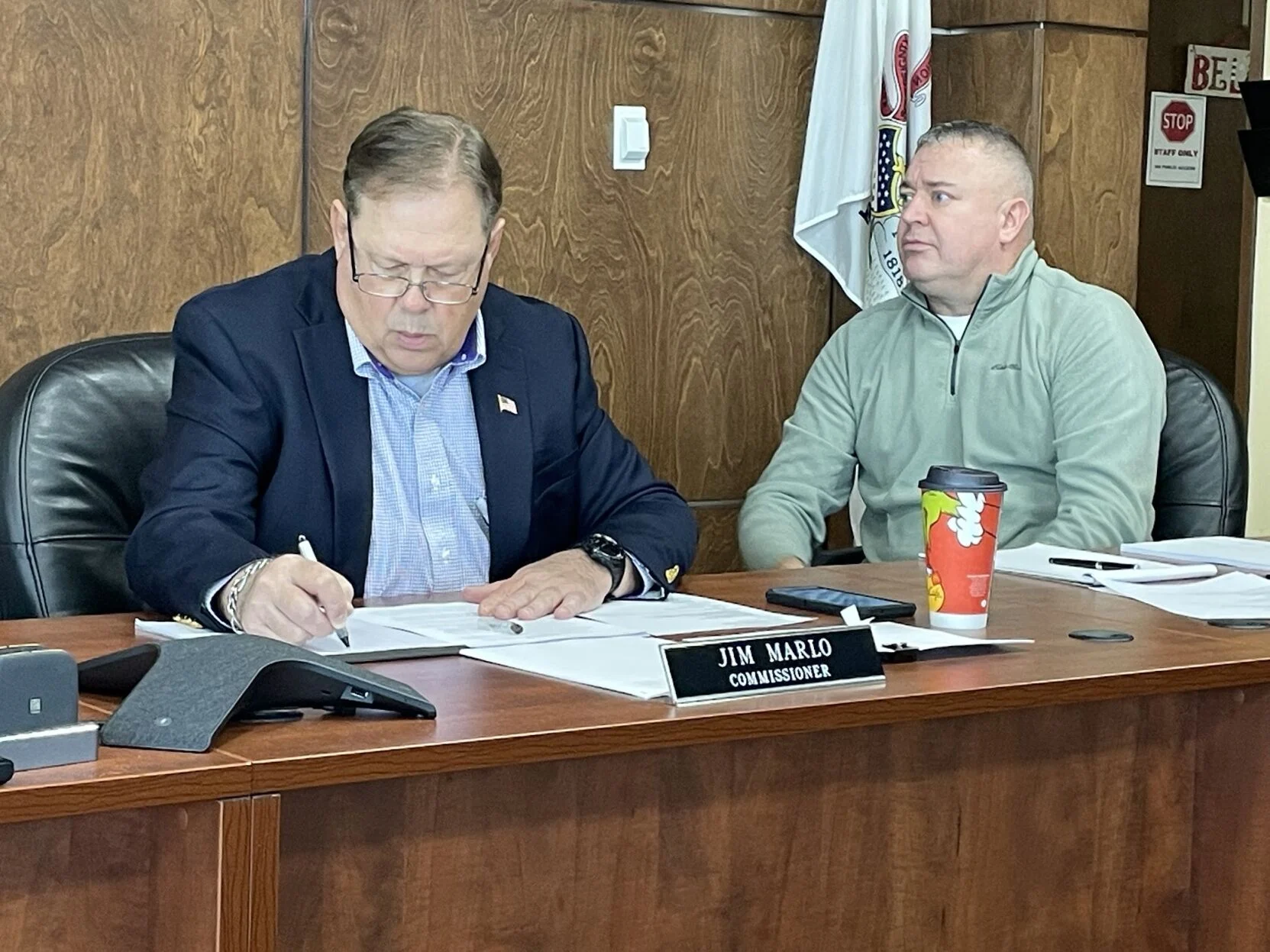
MARION — Williamson County commissioners voted 2-1 to place a nonbinding advisory referendum on the March ballot asking voters whether Illinois should opt into an federal scholarship tax credit program.
Supporters said the measure would give residents a chance to weigh in on an issue that could affect students statewide, even though the result would not carry legal force.
The advisory question will appear on the March ballot and allow Williamson County voters to register support or opposition to Illinois participating in the federal program.
Chairman Tim Atkisson and Commissioner Jim Rasor voted in favor of the resolution, while Commissioner Jim Marlo voted against it.
Rasor said he reviewed the proposal and saw little downside to letting voters express their views. He described the referendum as a way to communicate local sentiment to state lawmakers.
“I felt like it’s probably worth letting the voters vote on this and send their word up the line to what they think about it,” Rasor said.
Rasor said the proposed scholarship tax credit would be funded through private donations that qualify for a federal tax credit. Those funds could be used for a wide range of education-related expenses.
Eligible uses could include transportation, online classes, educational materials, therapies for students with disabilities and fees for standardized or college-admission exams, he said, and the program would not be limited to private school students.
“Our students in public schools can utilize this money if the state approves it,” Rasor said. “So even our students in our public schools can be using this.”
Atkisson said he generally favors giving voters a chance to weigh in, even when a referendum is advisory.
“These nonbinding referendums are just to give the folks a chance to say whether or not they want something,” Atkisson said. “Whenever we can give them outright ability to speak in a voter referendum, I think that’s something we should always take a look at.”
Marlo’s opposition was based on process rather than the proposal itself. He said he supports the concept of the scholarship tax credit but questioned whether the county board should place an advisory question on the ballot.
“If this were to actually pass the law, I would be in favor of it,” Marlo said. “But this is nonbinding.”
Marlo also raised concerns about cost and logistics, noting that placing the question on the March primary ballot could require additional ballots and programming.
“I think it costs [the county clerk’s office] more dollars to print special ballots for this resolution,” Marlo said. “So we’re spending money as well.”
County Clerk Amanda Barnes said the referendum would require a separate nonpartisan ballot option for voters who do not choose a Republican or Democratic primary ballot, including permanent vote-by-mail voters.
Marlo said he also worried about precedent, arguing that approving one advisory referendum could make it harder for the board to deny future requests. He noted that groups already have the option to place questions on the ballot through signature gathering.
“They can still get this done, but if they want it done, they can go ahead and get signatures,” Marlo said.
Rasor said the request to bring the resolution forward came from State Rep. Paul Jacobs. All three commissioners said Jacobs had contacted them about the issue.
Supporters of the referendum point to an federal scholarship tax credit approved by Congress that is scheduled to take effect Jan. 1, 2027.
Under the program, individuals could receive a dollar-for-dollar federal tax credit of up to $1,700 for donations to approved scholarship-granting organizations. For Illinois to participate, the governor would need to submit a list of qualifying organizations to the U.S. Treasury Department in 2026.
If Illinois does not opt in, donations from Illinois residents would be directed to students in other participating states.
The ballot question asks whether Illinois should opt into the program, which would allow public K-12, private school and homeschool students to access privately donated funds. Supporters say the program would not require state funding.