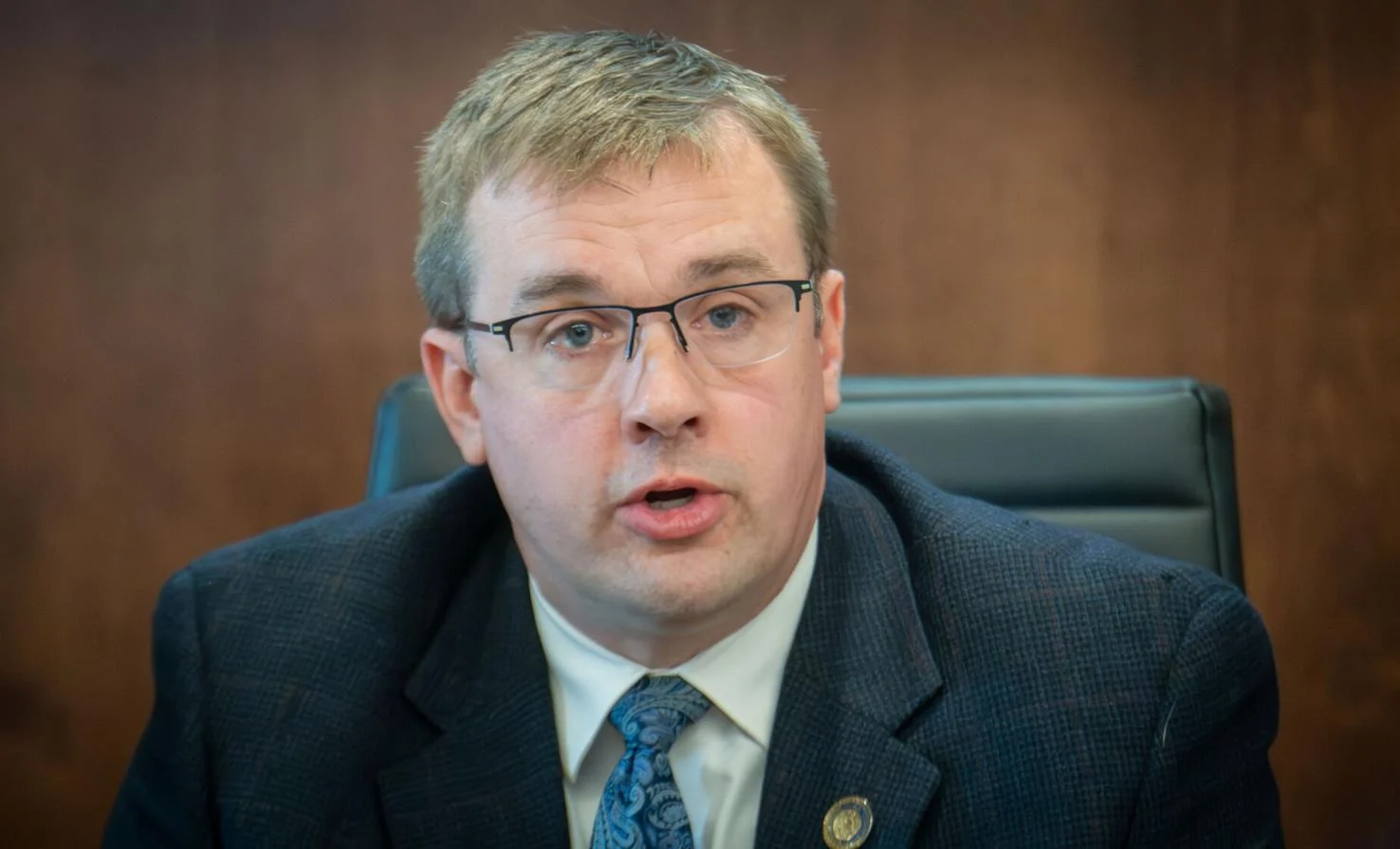
Republican State Rep. Bryan Cutler wants Pennsylvania to join a federal tax program meant to encourage people to donate to nonprofits to help pay for public and private school scholarships.
The tax credit program was introduced and adopted last summer as a part of President Donald Trump’s “One Big Beautiful Bill,” and starting next year will offer nonrefundable tax credits to people worth up to $1,700 for a donation to a “scholarship granting organization.”
Governors must decide whether to opt their state into the program, set to begin Jan. 1, 2027.
Cutler, whose 100th House District covers much of southern and eastern Lancaster County, urged Gov. Josh Shapiro to opt Pennsylvania into the tax credit program in a letter sent Tuesday, saying that doing so would benefit both taxpayers and students across the state. Six other Republican state representatives who serve on the House Education Committee, of which Cutler is the minority party leader, signed onto the letter.
In his letter, Cutler warned Shapiro that not signing onto the tax credit program would result in donations that “could have boosted the education of Pennsylvania’s own children” to instead support scholarships in other states.
“Do not pass up this opportunity and let dollars leave Pennsylvania,” Cutler wrote. “Please opt Pennsylvania into this important tax credit program that benefits both our Commonwealth’s taxpayers and students, and do not hinder the program’s success with burdensome requirements and stipulations beyond what it is in federal law.”
If Pennsylvania does not opt into the program, Cutler said, residents could donate to organizations in other states. He said he believes the tax credit program could help more students participate in career and technology programs that often have long waiting lists to join.
“I think we should do our best to keep (donations) here, because if we can keep the money in Pennsylvania, it’s more likely we can keep students in school here, and they may work here,” Cutler said.
State Sen. Scott Martin, a Republican whose district overlaps with Cutler’s, supports adding Pennsylvania to the federal tax credit program. As the former Senate Education Committee chair, Martin helped expand the state’s Educational Improvement Tax Credit Program that gives tax breaks to businesses that contribute to education or scholarship programs.
“It absolutely makes sense for Pennsylvania to take advantage of the new federal resources to help expand learning opportunities for students and families,” Martin said in an email statement Thursday. “Parents should have the ability to put their children in the best educational setting to meet their needs, and this federal funding could help many more families achieve this goal without impacting state taxpayers.”
Democrats unsure
Alex Peterson, a spokesperson for Shapiro’s office, on Thursday said no decisions have been made about whether Pennsylvania will join the tax credit program.
“The Shapiro Administration is awaiting federal guidance to address key questions about how this program would work, including which students will be eligible, how this federal initiative will interact with existing programs, and more,” Peterson said in an email statement. “We look forward to reviewing that guidance.”
It’s uncertain how much leeway states will have to tailor the program to their needs and interests, such as setting conditions for the types of students who should be favored for scholarships.
The Internal Revenue Service accepted public comments over a period of a month, ending in late December, to inform how the program rules are crafted; they are expected to be issued in the next several months.
Several governors have already announced plans to opt into the program, including Democratic Govs. Josh Stein of North Carolina, and Jared Polis of Colorado. Cutler cited Polis’s support of the program in the letter to Shapiro.
House Education Committee Majority Chair Rep. Peter Schweyer, D-Allentown, said it’s too soon to say whether he’s supportive of Pennsylvania opting in because, he said, “there isn’t a program.”
Without regulations or further word from the federal government on how the program would work, Schweyer said it’s difficult to know what to expect if Pennsylvania does sign on.
“I’m going to be eyes wide open and super skeptical of anything that comes out of President Trump who basically said he doesn’t believe in public education,” Schweyer said.
State Rep. Izzy Smith-Wade-El, D-Lancaster, also serves on the House Education Committee. He said he wants to read the final rules for the tax credit program before supporting or opposing Pennsylvania’s participation in the program.
“I’ll say that the people of my district overwhelmingly support public education and so what’s not clear… is what benefit there would be to Pennsylvania schools that have to educate every student that walks through the doors,” said Smith-Wade-El, whose district covers parts of Lancaster, Millersville and Lancaster Township. “I’m not familiar with the program but, as a general rule, I’m not head over heels to say I want to support schools that discriminate.”
Voucher concerns
Some public education advocates across the country have expressed concern that the tax credit program is too similar to school choice vouchers, which use taxpayer dollars to help parents enroll their children in private and charter schools.
A December report by the National Coalition for Public Education argued that the tax credit program would hurt public school students by utilizing public subsidies to pay for private school tuition and other expenses like room and board, both of which are not required expenses of public schools.
“Research shows that voucher programs strain state budgets and impact public school enrollment, which in turn leads to harmful budget cuts for the public schools serving about 9 in 10 students in the U.S.,” the report stated.
According to Congress, the scholarship dollars are also intended to be used for books, academic tutoring, uniforms, transportation, computer technology and internet access.
The National Coalition for Public Education also claimed the tax credit program could hurt low-income students by capping the income qualifications at 300% of the area gross median income, opening up the eligible scholarship recipients to a fairly large pool of students.
Nathan Benefield, chief policy officer for the pro-school voucher Commonwealth Foundation, said he has high hopes for the federal tax credit program, drawing similarities to Sen. Martin’s statewide tax credit program that he said has been positive for all students.
The idea that a federal tax credit program could hurt public school students, he said, is “nonsense.” Parents will have the right to decide how to use the scholarship funds their children receive, he said.
“If we don’t opt in, the difference for public schools is zero,” Benefield said. “It takes $0 out of public schools. It doesn’t affect public school funding at all.”
Chris Lilienthal, a spokesperson for the Pennsylvania State Education Association, said the organization is waiting to hear from the IRS about program requirements before taking a stance. In the past, Lilienthal noted, the teachers union has not supported voucher programs, though he said it’s too soon to say whether organization leaders consider the tax credit program to be the same as a voucher program.
The PSEA’s support, he said, will come down to whether the program will benefit public school students.
“That’s our big concern,” Lilienthal said. “We want to make sure our public schools have adequate resources.”